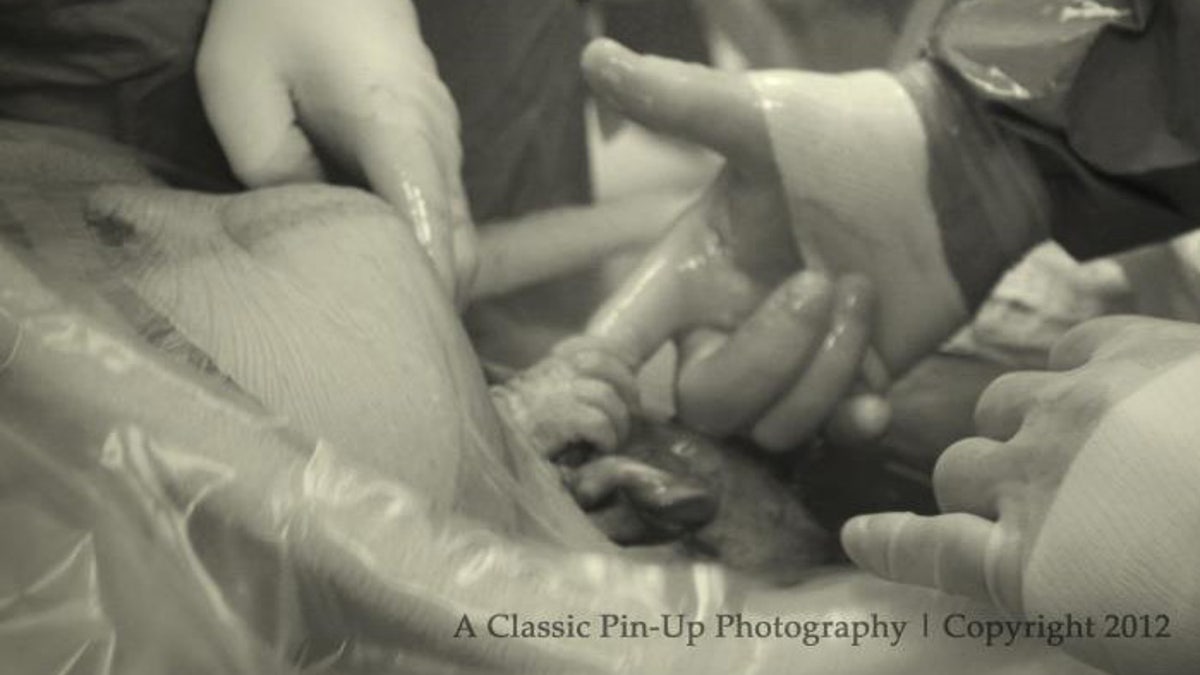
In 2012, a photo appeared on the web of a child’s delicate little hand grasping a surgeon’s finger. The child was reaching out from his mother in the midst of a C-section delivery. Could it be that even in the womb we are driven to reach out for life, meaning, for value, and purpose?
I have no memories of life at the infant stage. Emotions of great joy or sadness affix the memories I do have. Oftentimes joy plummets to sadness within moments. I remember joy while racing my brothers and sisters to ask Mom for money to buy ice cream from the “Mister Frosty” truck as its familiar chime-like melody approached. Then sadness fell upon us when Mom was unable to indulge our desire. Is disappointment and unfulfilled desire part of the meaning of life?
Mom died of rheumatic fever when I was 5 years old. I gazed into the reality of having lost the first person who gave me meaning. Mom meant joy; no Mom meant sadness. Raised by my Dad, his Mom, Delmina, we called Memere, and his sister, Terry, the emotion of joy somehow felt different; someone was missing.
As a child, I tried to find meaning in the basics: food and shelter, toys and games, movies, entertainment, and music. At the holidays, we would enjoy delicious food and large family gatherings. New clothing from Christmas would help define us as children of the 60s. Our homes, our church, and loved ones would shelter us from natural and cultural storms. The television, radio, and magazines would entertain, educate, inspire, and corrupt us.
Growing up Catholic, I had studied the Catechism, which had answers to the big questions of life: Who is God? Who is man? What is man’s purpose? etc. In High School, I began questioning my understanding of these ideas, searching for the truth.
My Dad died from a heart attack in 1972. When many of my classmates consoled me, I realized I had friends who cared about me, enjoyed my company, and shared my yearning for discovery. We explored the experience of alcohol and drugs together. After graduating, I worked for a few years and then decided to fund my way through college. Exploring experiences that seemed exciting along the way, life was now about experience and pleasure, indulging my flesh and numbing my mind. I had taken the advice of the infamous 70’s LSD advocate psychologist Timothy Leary: “Turn on, Tune in, Drop out.” 1.
A drug-induced brush with death (real or imagined) awakened me to the fact that I needed God in my life more than ever. I had encountered fear, and as Huey Newton said: “My fear was not of death itself, but a death without meaning.” 2. After many hours of sleeplessness, sweating, and prayer, I determined to break free from the evil that was about to destroy me. I cried out to God. I felt His prompting to get on with life, marry the girl He blessed me with, and draw closer to Him. Since then, we have had 5 children, raised them to adulthood, and are now enjoying the blessing of 11 grandchildren.
Each day, consciously and subconsciously, my search for meaning continues. Approaching 70, I have again the small luxury of time to contemplate life. In this collection of writings, I will share a part of my journey in exploring what scholars and others have to say about truth and the meaning of life. You will also find that I touch on current events and topics of interest.
What is the meaning of life? Perhaps the search itself is part of the meaning and is as instinctive as a child reaching out to grab hold of someone’s finger.
1 “Turn on, tune in, drop out“ is a counterculture-era phrase popularized by Timothy Leary in 1966. Wikipedia
2 Huey Percy Newton (February 17, 1942 – August 22, 1989) was an African-American political activist and revolutionary who, along with Bobby Seale, co-founded the Black Panther Party in 1966.


I really liked the story of the new born.
looking forward to more.
LikeLike